The Digital Blood Oath: A No-Nonsense Guide to the VPN Handshake
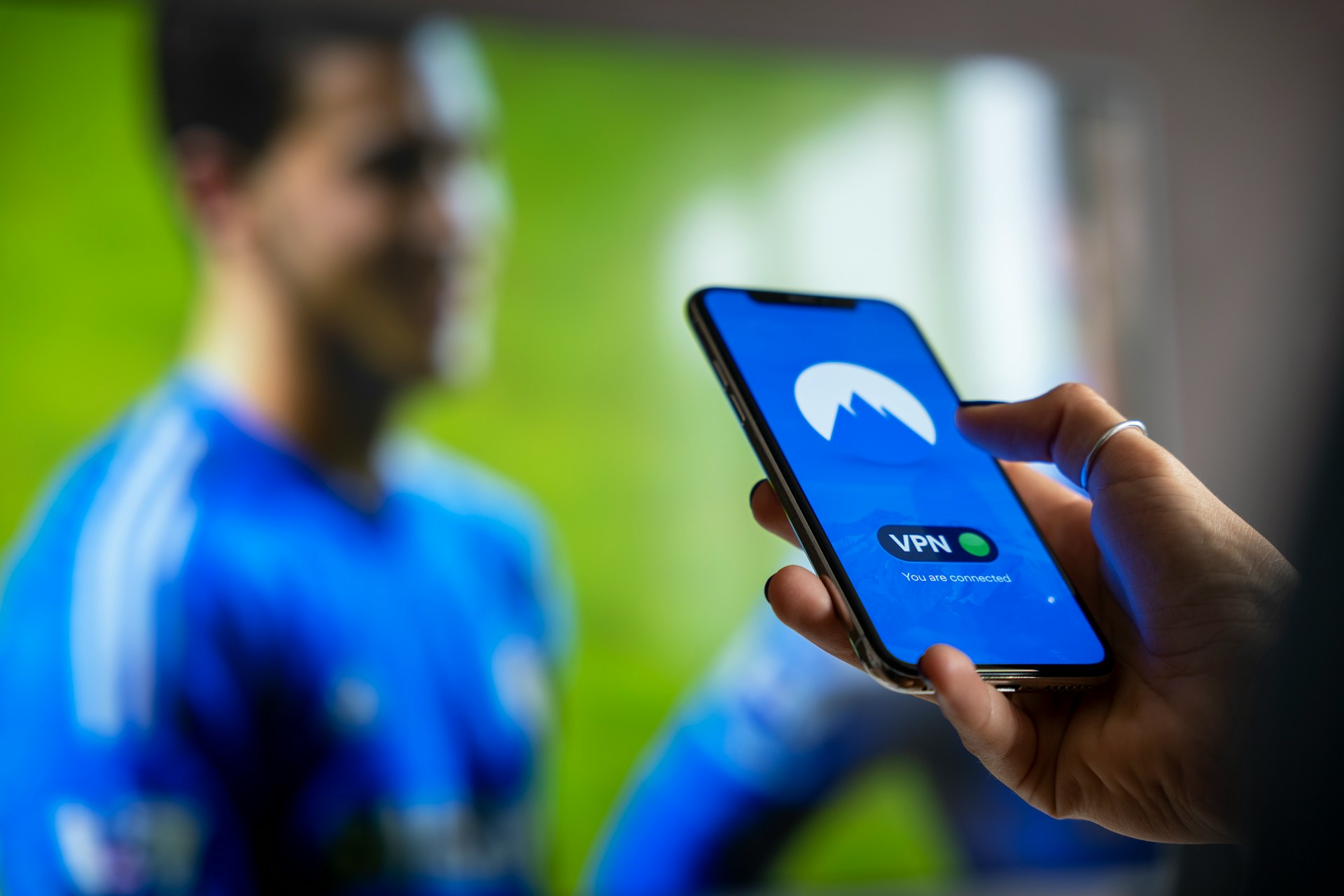
You hit a button. A little icon turns green. You’re “safe.”
But what actually happened in those three seconds of spinning? To most people, it’s just a loading screen. To a network engineer, it’s a high-speed, high-stakes negotiation that makes a diplomat’s summit look like a toddler’s playdate.
This is the VPN Handshake.
It’s not just a polite “hello.” It is a cold, calculated process of two machines proving they aren’t liars, agreeing on a secret language, and locking the door behind them. If this handshake misses a single beat, your privacy isn’t just compromised—it never existed in the first place.
Image Credit: Pixabay under Creative Commons
1. The “Who Goes There?” Moment (Authentication)
I was sitting in a crowded airport lounge last month, using the free Wi-Fi to check my bank balance. Without a handshake, I’d be insane. Why? Because the guy sitting two seats over with the oversized “gaming” laptop could easily be pretending to be my VPN server.
This is where Authentication saves your skin.
Before a single byte of your data is encrypted, your device needs to see some ID. In the world of VPNs, this usually involves Digital Certificates. Think of these as a passport issued by a government (a Certificate Authority) that is physically impossible to forge.
- The Server’s Proof: The server hands over its Your device checks the “seal” to ensure it’s actually the server you intended to reach.
- The Client’s Proof: Sometimes, the server asks for your ID This might be your username, a password, or a unique certificate stored on your phone.
If the IDs don’t match? The connection is killed before it starts. No talk, no tunnel, no risk.
2. The Great Cipher Menu (Negotiation)
Computers are picky eaters. One might love the raw speed of ChaCha20, while the other insists on the industry-standard AES-256.
During the “Hello” phase of the handshake, your device and the server basically trade menus. They look for the strongest encryption algorithm they both know how to speak.
A Ǫuick Reality Check: If your VPN is using 128-bit encryption in 2026, you’re basically locking your front door with a twig. The handshake ensures you’re using the “heavy metal”—the 256-bit stuff that would take a literal billion years to crack with today’s hardware.
3. The Magic of Not Saying the Secret (Key Exchange)
Here’s the part that usually blows people’s minds. For the VPN to work, both you and the server need the same “Secret Key” to lock and unlock the data. But you can’t just send the key over the internet. That’s like taping the key to the outside of a safe.
So, how do two strangers agree on a secret without ever saying it? They use the Diffie- Hellman Key Exchange.
An Analogy for the Rest of Us
Imagine you and a friend want to agree on a secret number.
- You both agree on a public number, say 7.
- You pick a secret number (3) and do some math: $7 \times 3 = 21$. You send “21” to your friend.
- Your friend picks a secret number (5) and does math: $7 \times 5 = 35$. They send “35” to you.
- Now, the magic: You take their “35” and multiply it by your secret “3” to get 105.
- They take your “21” and multiply it by their secret “5” to get 105.
You both have “105,” but you never sent it. An eavesdropper saw 7, 21, and 35, but they don’t know your secret multipliers, so they can’t reach 105.
In a real VPN handshake, the math involves massive prime numbers and modular arithmetic, but the soul of the process is the same: Privacy created out of thin air.
4. Setting the Timer (Session Setup)
The handshake is almost over. You’ve proved who you are, picked a language, and whispered a secret key. Now, you need to decide when to throw the keys away.
This is called Session Setup. Most people don’t realize that a VPN connection isn’t a “forever” thing. To keep hackers on their toes, modern VPNs use Perfect Forward Secrecy (PFS).
Every hour (or every few gigabytes), the VPN will silently perform a “re-handshake.” It throws away the old keys and makes new ones. This means even if a genius hacker manages to steal your keys for this hour, they can’t use them to read what you sent last hour.
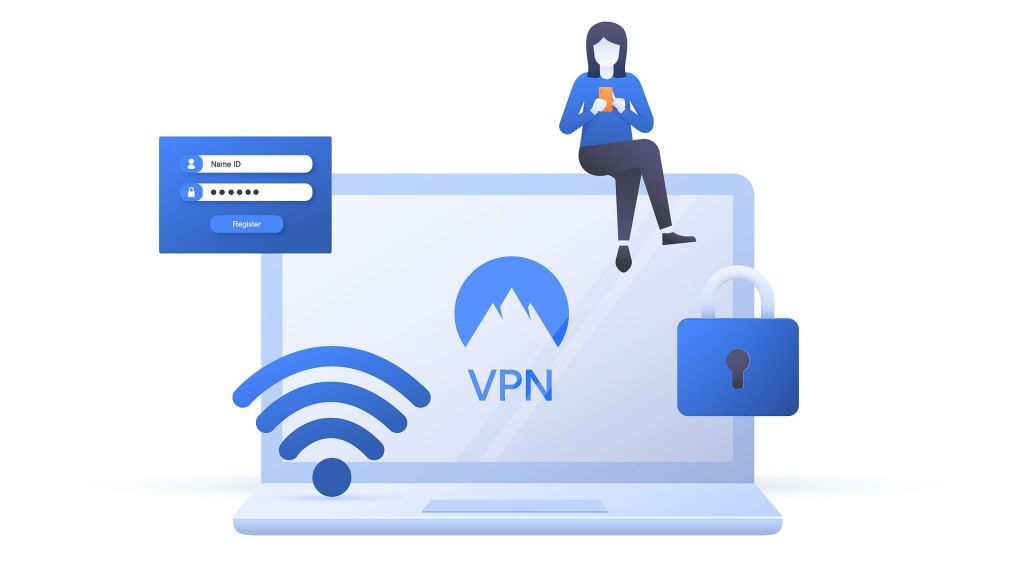
Image Credit: Pixabay under Creative Commons
Why Should You Give a Damn?
Look, I get it. This sounds like digital housekeeping. But the handshake is where the “Private” in Virtual Private Network actually happens.
If you use an outdated protocol like PPTP, the handshake is basically a pinky-promise. It’s weak. If you use WireGuard or OpenVPN, that handshake is a titanium-reinforced bond.
The takeaway?
When your VPN takes an extra second to connect, don’t get annoyed. That’s the sound of the steel bolts sliding into place. It’s the sound of a complex mathematical dance that ensures your data stays your business.
FAǪ: The Stuff People Actually Ask
1. Does a VPN handshake slow down my internet?
The handshake itself only happens at the beginning, so it doesn’t affect your download speeds. However, if the handshake picks a “heavy” encryption (like AES-256) and your device has a weak processor, the encryption process might slow things down a bit.
2. What happens if the handshake fails?
Usually, your VPN client will just keep retrying or throw an error like “TLS Handshake Failed.” This often means your system clock is wrong (certificates hate that) or your ISP is actively trying to block the VPN’s “secret knock.”
3. Can someone see that I’m doing a handshake?
Yes. Your ISP can see that you are connecting to a VPN. They can see the handshake happening. They just can’t see the results of it—they don’t get the keys, and they don’t get the data that follows.
The Final Word
The VPN handshake is the ultimate act of digital trust. It is a bridge built in a fraction of a second over an abyss of untrusted networks and prying eyes.
Your move: Take a peek at your VPN settings. Are you using “Automatic” protocol selection? Try switching to WireGuard. It has the fastest, leanest handshake in the game. Why wait for your privacy when you can have it instantly?
Do you trust your current VPN’s “hand” enough to shake it, or is it time to find a more secure partner?